


Managing a crisis is not just about having the right plans. It is about having exercised them, and about ensuring communication works when it matters.
CAPABILITY IS BUILT IN PRACTICE
An organisation’s robustness is ultimately determined by how it performs when conditions change fundamentally. A central part of that capability is being able to maintain communication and command even when ordinary systems come under pressure.
Sweden is planning for an armed attack as the most extreme scenario. That means civilian operations must be able to withstand prolonged disruption to critical infrastructure, and that capability has to be built and maintained in practice, not just described in documents.
EXPERIENCE FROM LIVE OPERATIONS
Since 2006, TPO has established and operated communication in environments where it has to work immediately, with no start-up time and no margin for error. In recent years, that work has been further developed through RIaaS, a collaborative initiative involving municipalities, businesses, voluntary defence organisations and public authorities and agencies.
The lessons are clear: different systems and actors rarely work together without friction, and cooperation is exercised too seldom. Capability is not built through procurement. It is built when technology, organisation and workflows function together in practice.
HOW WE BUILD OPERATIONAL PREPAREDNESS
Our solutions are based on practical training and capability testing, and are complemented by robust communication in the field.
SECURITY POINTS
Information and communication during societal disruption
A security point must be able to function when public services are out of operation. That requires communication and on-site connectivity, even without access to the ordinary network.
TPO supports organisations in establishing and exercising this capability in practice. The same capacity can also be deployed operationally in an actual incident.
-
Read more
A security point is a municipal function that is activated when ordinary societal services are no longer functioning, such as during power outages, disruptions to communication networks or other events that seriously affect society, and ultimately in a state of war. It is a place where residents must be able to access information, communicate and receive support when access to essential societal functions is limited.
For a security point to function, it is not enough for it to exist on paper. It requires working communication, power supply, staffing and established ways of working. Communication is the hub. Without connectivity, it is difficult to provide information, receive situational updates or maintain contact with the outside world.
The Swedish Civil Defence and Resilience Agency is clear: security points must work in practice, even during prolonged disruption to ordinary infrastructure. That requires communication and connectivity that can be set up independently of the ordinary network.
TPO supports municipalities and voluntary defence organisations in building this capability. Through realistic exercises, the entire chain is trained, from establishing alternative connectivity and local networks to distributing information and maintaining communication both locally and externally. The infrastructure can be integrated into existing IT environments or established as a standalone solution, depending on needs and conditions.
The same capacity can also be deployed operationally when required. This means TPO can establish and operate communication and connectivity in the field, with both equipment and operational personnel, so that the security point functions in an actual incident.
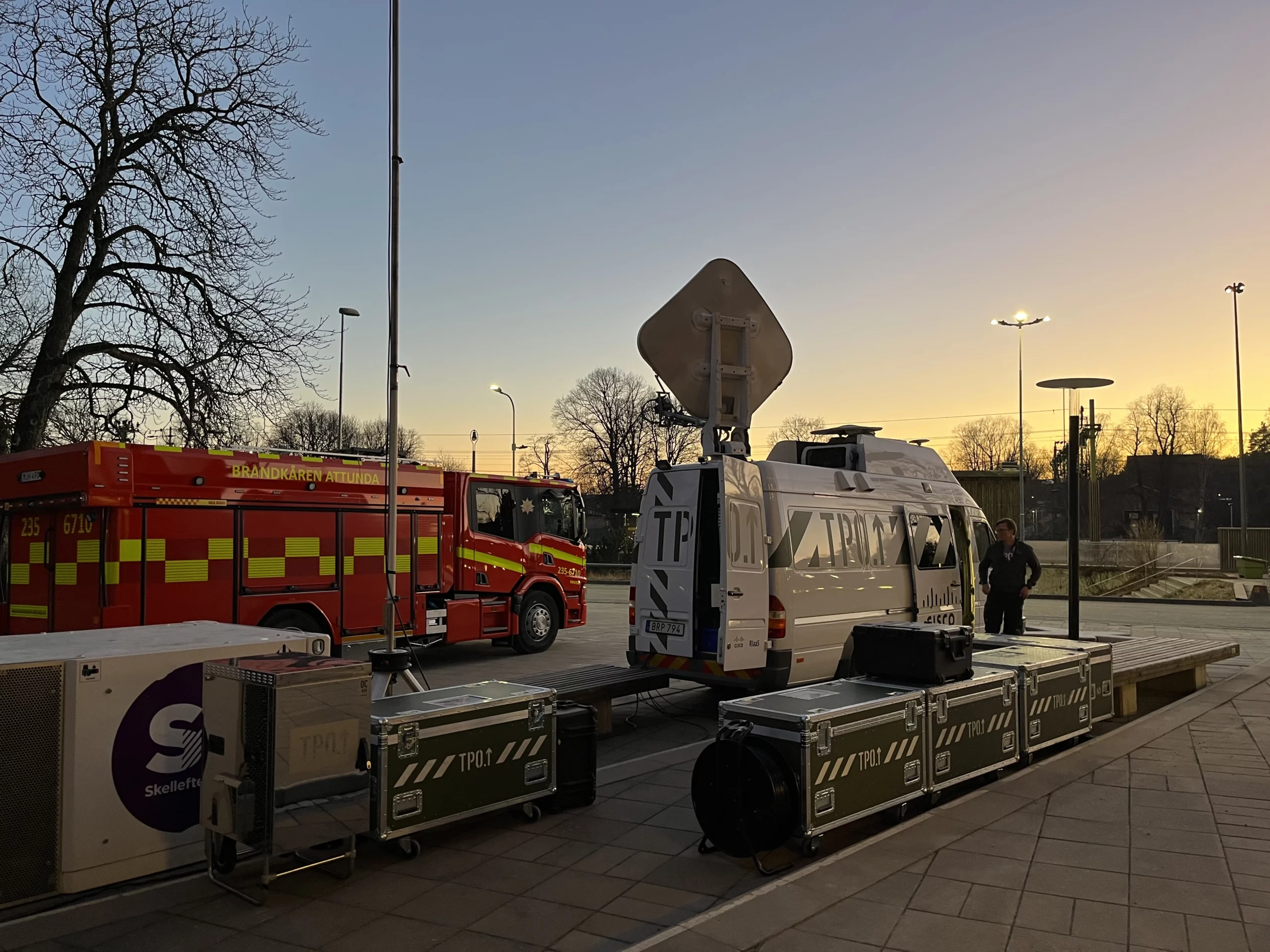
ALTERNATIVE COMMAND LOCATION
Command and coordination during disruption
An alternative command location allows leadership and decision-making to continue when ordinary facilities or systems are unavailable.
TPO supports organisations in establishing and exercising temporary communication that enables a functioning command environment. The same capacity can also be deployed operationally at short notice when needed.
-
Read more
An alternative command location, or alternate command post, is an environment where command functions can be maintained when ordinary facilities, systems or communication solutions are no longer working. This may be the result of cyberattacks, power outages or war disrupting networks, facilities or functions that are normally taken for granted.
For an alternative command location to function, access to a physical site is not enough. It also requires access to the right information, functioning communication channels and the conditions needed to make decisions and coordinate efforts under pressure. Without connectivity, it is difficult to build a situational picture, track developments or coordinate with other actors.
Dependence on individual facilities and systems needs to be reduced. In practice, that requires a temporary command environment that can be established quickly, with access to communication, systems and data, entirely independent of ordinary structures.
TPO supports organisations in building this capability. Through exercises in realistic scenarios, the entire chain is trained, from establishing temporary communication and connectivity to creating a command environment where decision-making and coordination function under pressure. This includes alternative connectivity, temporary distribution networks and access to business-critical systems and services.
The same capacity can also be deployed operationally when needed, with both equipment and personnel, to enable command and coordination during an actual incident.
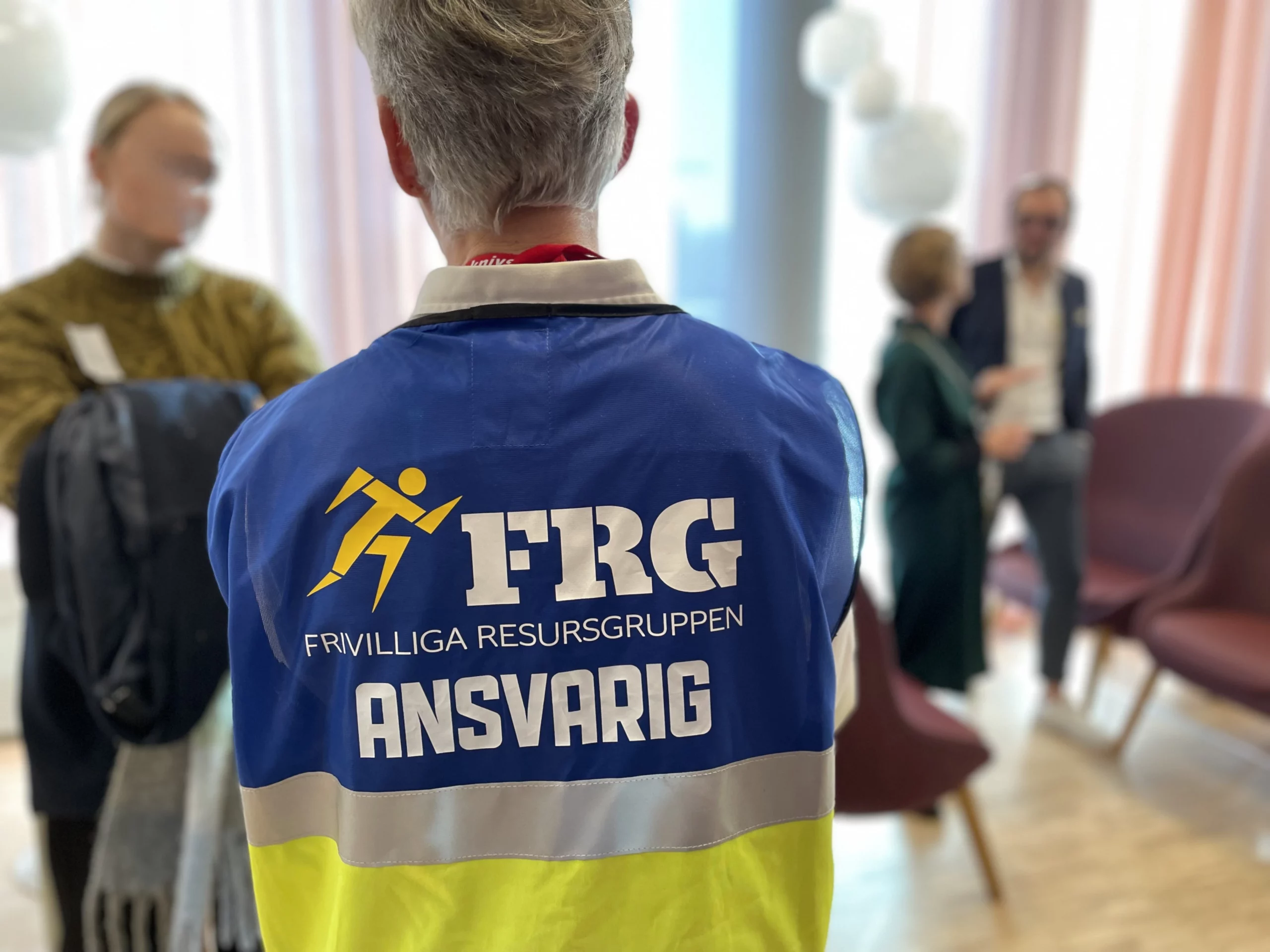
TESTBED AS A SERVICE
Operational environments for tests and exercises
Testbed as a Service is an operational format for tests and exercises in which technology, people and ways of working are tested together in an integrated environment where communication and operations are put in place and used in practice.
The testbed is used in organisations and scenarios where the demands on functioning communication and connectivity are high, for example to test and develop capabilities such as a security point or an alternative command location.
-
Read more
The testbed is established as a temporary operational environment in which communication, command, coordination and operational functions are set up and tested under real conditions. The environment can be adapted to the scenario and requirements, and is established independently of existing infrastructure.
At the core of the testbed is robust and flexible field infrastructure for electronic communication. This includes alternative internet connectivity through combined bearer systems, where 4G/5G and satellite can be combined to create a stable and redundant connection. Where needed, fibre routes and other connections can also be integrated.
Connectivity can be distributed further through local networks, enabling communication and information sharing within an existing environment, or used as the foundation for building an entirely new temporary environment from the ground up. Redundancy and multiple independent communication paths ensure that connectivity is maintained even if individual systems fail.
The testbed includes power supply, equipment and the functions required to create a working operational environment in the field. But it is not just about setting up technology. The environment is staffed and operated in a way that makes it function from the first connection through to ongoing use.
As an exercise format, the testbed allows realistic scenarios where technology, organisation and working methods are tested together. It helps identify gaps and develop capability under controlled conditions. Not in a meeting, but in practice.
The platform is used both for training and for operational deployment. This allows TPO to mobilise equipment and personnel quickly in the event of an actual incident.
SDL 3.0
Mobile capability for electronic communication
SDL 3.0 is a portable solution for rapidly establishing communication where ordinary networks are no longer sufficient. Stable, redundant and independent of existing infrastructure.
-
Read more
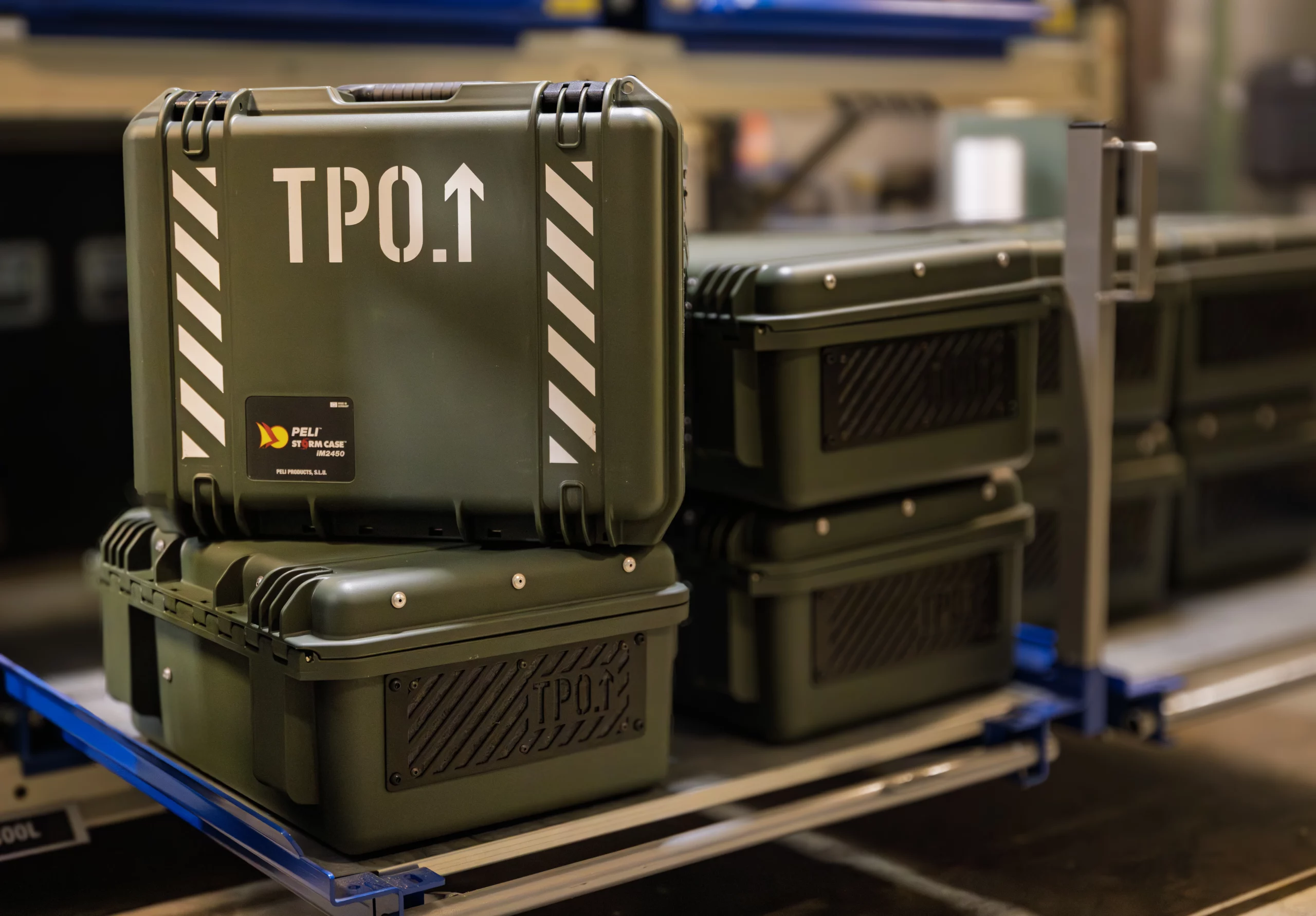
SDL 3.0 is a modular solution in a rugged case, designed to be brought into operation quickly in operational contexts where time and availability are critical.
The core capability is the ability to combine multiple independent connectivity paths. National roaming SIM cards for 4G/5G together with satellite, and other connections where needed, create a stable and redundant internet connection that remains operational even when individual networks are overloaded or out of service.
SDL 3.0 functions as a mobile communications hub. Around it, local networks and distribution networks can be set up quickly, giving users and functions access to connectivity, communication and relevant systems. The solution can reinforce existing infrastructure or establish entirely new communication environments in the field.
It is designed for immediate use in operational situations. At the same time, it is a central building block within Testbed as a Service, enabling training and exercises in communication deployment in realistic scenarios.
Depending on the scenario and operational need, SDL 3.0 can be supplemented with backup power and batteries, radio communications and other building blocks for robust communication in the field.
OPERATIONAL PREPAREDNESS SUPPORT
Strengthen the ability to function when it matters
Operational Preparedness Support helps organisations build or strengthen their capability in technical preparedness, communication and IT security, from current-state analysis to implementation and exercises.
-
Read more
Operational Preparedness Support is intended for organisations that need to develop their capability in technical preparedness, maintaining communication and IT security. The work is based on the organisation’s own needs and conditions.
TPO brings operational expertise and works together with the organisation to define requirements, identify gaps and develop working methods that function in practice. This may involve how communication is established during disruption, how critical functions are maintained, and how command environments and technical solutions operate independently of ordinary infrastructure. Where needed, the work is carried out in collaboration with partners in areas such as cybersecurity.
What sets this apart from traditional preparedness work is that the focus is not on documentation. The focus is on making sure the capability actually works, and that solutions are tested, used and anchored in the organisation. Not filed away in a binder.
The work is carried out as a long-term development of capability and covers the entire chain, from current-state analysis and prioritisation to implementation, exercises and ongoing use.
FARADAY CAGE
Shielded electronic communication
A Faraday cage creates a shielded environment in which communication and critical functions can operate without being affected by surrounding signals. This is particularly relevant for operations with high demands for secure and predictable performance in disrupted or uncertain signal environments.
-
Read more
A Faraday cage is a physical enclosure that shields electronics from electromagnetic fields and radio signals. It protects equipment and communication from interference, signal disruption and unwanted signal access, creating a controlled environment in which electronic systems can operate without external interference.
The solution is relevant in environments with high demands for robust and secure communication. This may involve command functions, staff locations or other critical applications where external signal influence needs to be limited or eliminated entirely.
TPO delivers Faraday cages as integrated parts of a larger operational solution. They can be combined with communication systems, power supply and other infrastructure to create protected and functional environments in both fixed and temporary settings.
INTERACTIVE TRAINING ENVIRONMENTS
Command and decision-making under pressure
Interaktiva träningsmiljöer gör det möjligt att öva ledning och beslutsfattande i scenarier med tidspress, osäker information och föränderliga förutsättningar. Det synliggör hur ledningsfunktioner faktiskt fungerar och var de brister.
Interactive training environments make it possible to exercise command and decision-making in scenarios involving time pressure, uncertain information and changing conditions. They reveal how command functions actually perform, and where they fall short.
-
Read more
TPO creates interactive training environments for exercising command, decision-making and coordination in scenarios where ordinary structures do not function as intended. The focus is on how command teams act when conditions change, information is incomplete and time pressure is high.
The environments are developed based on real needs and can take the form of physical rooms, modules or containers that simulate, for example, an alternative command location or another operational environment. Drawing on experience from interactive environments and immersive formats, scenarios are designed to create realistic conditions in a controlled setting. They can be integrated with communication platforms, internal systems and other equipment to make the situation as realistic as possible.
By combining operational equipment with scenario-based dramaturgy, time pressure and consequences, exercises are created in which participants must act in real time. This makes it possible to see how decisions are made, how information is handled and how coordination works, or does not work, in practice.
The training environments function as a complement to Testbed as a Service, with a focus on behaviour, decision-making and collaboration under pressure. They can be delivered as part of recurring exercises or as targeted interventions.
AN ECOSYSTEM FOR OPERATIONAL CIVIL PREPAREDNESS
TPO’s civil preparedness offering is built on a network of partners with supplementary capabilities. This makes it possible to assemble solutions in which technology, resources and working methods function together in practice.
The ecosystem includes partners in:
- Electronic communication and network infrastructure
- Power supply and energy solutions
- Cybersecurity and information security
- Training, exercises and methodology
- Fixed and temporary connectivity
- Temporary physical infrastructure and deployment environments
- Field logistics, supply and operational support
We have worked with these partners in environments where capability has to function under pressure. That has given us a clear understanding of what is required for technology, staffing and working methods to function together when ordinary structures are no longer sufficient.
For you as a customer, this means access to an integrated whole rather than having to manage several parallel suppliers. TPO takes responsibility for ensuring that communication, power, environments and operational ways of working come together as a functional and usable capability.